
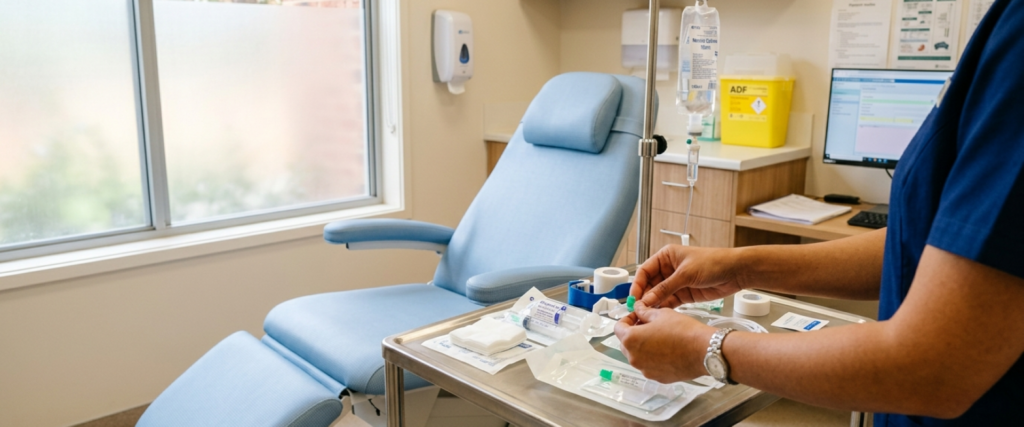
An iron infusion is a straightforward, in-clinic treatment that raises your iron levels directly through a vein, and it’s a common next step when blood tests confirm a deficiency that tablets alone haven’t fixed. If your GP has mentioned this option, or you’re simply feeling persistently tired and want to understand what’s involved before you commit, this guide walks through exactly how the process works locally, from your first consultation through to the infusion itself. You don’t need to travel to a hospital for this — it can be arranged as part of your ongoing care with your regular doctor.
Key Takeaways
- Iron deficiency is usually confirmed with a blood test before any infusion is considered.
- Your GP will review your test results and discuss whether an infusion suits your situation.
- On-site pathology through SydPath means testing can happen without a separate trip elsewhere.
- The infusion itself is administered by clinical staff and monitored for the duration of the appointment.
- Ongoing GP follow-up helps track whether your iron levels and symptoms have improved.
What Is an Iron Infusion and Why Would You Need One?
Iron is essential for producing haemoglobin, the protein in red blood cells that carries oxygen around the body. When iron stores run low, common symptoms include fatigue, pale skin, shortness of breath, and difficulty concentrating. Many people can restore their iron levels with oral supplements and dietary changes, but tablets don’t always agree with everyone’s digestive system, and in some cases the deficiency is significant enough that oral iron simply isn’t practical or fast enough to correct it. An iron infusion delivers iron directly into the bloodstream, which can be a more suitable option when oral iron hasn’t worked, hasn’t been tolerated, or when a doctor determines that a faster correction is appropriate for your circumstances.
Whether an infusion is the right choice for you is a decision made between you and your doctor, based on your specific test results, symptoms and medical history. No two patients’ situations are identical, so this is never a one-size-fits-all treatment.
Getting Tested First: Confirming Iron Deficiency
Before any infusion is discussed, the process starts with a proper diagnosis. Your GP will take a history of your symptoms and typically arrange blood tests to check your iron studies, along with your full blood count and other relevant markers. Because pathology collection is available on-site through SydPath, the on-site pathology provider, you can usually have your blood drawn during the same visit rather than being sent elsewhere and having to book a separate appointment. This is one of the practical advantages of managing the whole process through your local GP.
Once results are back, your doctor will go through them with you and explain what they mean. If your iron stores are genuinely low and an infusion is considered appropriate, your GP will talk you through what that involves, what to expect, and answer any questions you have before proceeding. To understand more broadly how these results fit into your overall health picture, it’s worth reading about the role pathology plays in diagnosis and treatment.
Iron Infusion in Malabar: How the Appointment Works, Step by Step
If you and your doctor decide an iron infusion appointment in Malabar is the right next step, the process itself is designed to be as comfortable and unremarkable as possible. Here’s roughly what to expect on the day: Healthdirect Australia’s guidance on iron infusion sets this out in more detail.
- Check-in and a brief review: Your doctor or clinical staff will confirm your recent test results, ask about any changes to your health, and check for anything that might affect the infusion, such as allergies or current medications.
- Insertion of a small cannula: A fine, temporary tube is placed into a vein, usually in your arm or hand, through which the iron solution is administered.
- The infusion itself: Iron is delivered slowly and steadily through the cannula. You’ll be seated comfortably for this part of the appointment, and clinical staff monitor you throughout.
- Monitoring afterwards: You’ll typically be observed for a short period after the infusion finishes, to check you’re feeling well before you leave.
- Follow-up plan: Your GP will discuss when to expect improvement in your symptoms and whether any further blood tests are needed down the track.
Because this is carried out at your regular general practice rather than a hospital day unit, you’re being cared for in a familiar setting by a clinical team who already has access to your history — which many patients find reassuring throughout the whole process.
Having an iron infusion doesn’t need to mean a trip to hospital — for many patients, it simply means an appointment with the GP who already knows their history.
If you’ve had blood tests elsewhere showing low iron, or your current GP has raised the possibility of an infusion, our team can talk you through your options and what a plan tailored to your results might look like.
What to Expect in the Days After Your Infusion
Most patients tolerate iron infusions well, though it’s normal to be told to watch for mild, short-lived reactions like a headache, muscle aches, or discolouration near the injection site in the days that follow. Your GP will explain what’s expected versus what would warrant a call back to the clinic — this is individual to your situation, so always follow the specific guidance you’re given rather than general assumptions.
Symptom improvement, such as reduced fatigue, is often gradual rather than immediate, since your body needs time to use the newly available iron to produce healthy red blood cells. Your doctor may recommend a follow-up blood test some weeks later to confirm your levels have responded as expected, and to decide whether any further treatment or monitoring is needed. Ongoing management of iron deficiency is much like other reasons people see a general practitioner for a health issue — it benefits from continuity of care with a doctor who can track your progress over time rather than a single, isolated treatment.
Why Manage Iron Deficiency Through Your Local GP
For many patients across Malabar, Maroubra, Matraville, Chifley, La Perouse, Phillip Bay, Eastgardens and the surrounding areas, having testing, diagnosis and treatment coordinated by the same family practice means less duplication and fewer appointments spread across different providers. Your GP already has your history, your previous results and an understanding of any other conditions you’re managing, which all help inform whether and when an iron infusion makes sense for you.
It’s worth remembering that an iron infusion is a treatment decided on a case-by-case basis, guided by your test results and your doctor’s clinical judgement — not something arranged without that assessment first. If you’re feeling persistently tired, run down or simply want your iron levels checked, the right first step is always a conversation with your GP.
Frequently Asked Questions
How do I know if I need an iron infusion rather than iron tablets?
This depends on your test results, how severe your deficiency is, and how you’ve responded to or tolerated oral iron in the past. Your GP will assess your specific situation and recommend the most appropriate option for you.
Do I need a blood test before booking an iron infusion?
Yes. Confirming a genuine iron deficiency through blood tests is the standard first step before an infusion is considered, and testing can be arranged on-site through SydPath as part of your GP visit.
Is an iron infusion painful?
Most patients describe only the brief discomfort of the cannula being inserted, similar to having a blood test. The infusion itself is generally well tolerated, though everyone’s experience differs — your doctor can talk you through what to expect.
How long does an iron infusion appointment take?
This varies depending on the specific treatment and monitoring required, so it’s best to check the expected appointment length with the clinic when you book.
Will I need follow-up blood tests after my infusion?
Often, yes. Your GP may recommend a follow-up test some weeks later to confirm your iron levels have improved and to guide any further care.
Can I have an iron infusion at Malabar Medical Centre without a referral?
You’ll first need a consultation with a GP so they can review your symptoms and arrange the necessary testing. From there, they’ll discuss whether an infusion is appropriate for you.
Getting the Right Care for Iron Deficiency, Close to Home
Feeling constantly tired or run down doesn’t have to be something you simply push through. Iron deficiency is common, well understood, and treatable, and having it investigated and managed by a GP who knows your history takes away a lot of the uncertainty about what happens next.
Whether you’re just starting to wonder if low iron might explain how you’ve been feeling, or you already have results in hand and want to discuss next steps, the team at Malabar Medical Centre is here to talk you through your options.
We’re open Monday to Friday 8:00am–5:00pm and Saturday 8:00am–11:30am.